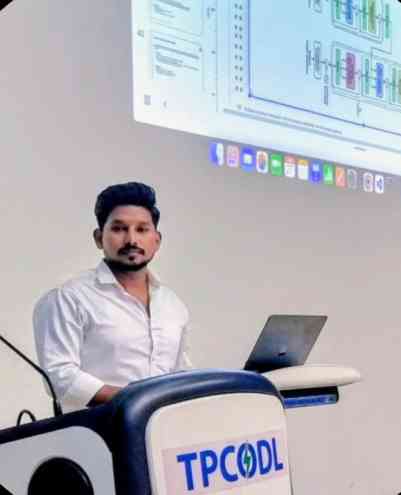
Instructor & mentor (AI & ML) — LogicMojo AI Candidate cohort guidance. Senior AI Architect at Samsung R&D Division with deep expertise in building production-grade AI systems and mentoring aspiring AI professionals.
View LinkedIn profile2026 Edition · Built for working JVM engineersLast updated June 18, 2026
Top 10 Best AI Courses for Java Developers in 2026
Add LLMs, RAG, and AI agents to the skills you already have — and ship them in production with Spring AI and LangChain4j, without ever leaving the JVM.
Curated & reviewed for senior Java & enterprise engineers — not absolute beginners.

Skills you'll add to your stack
Spring AILangChain4jLLM IntegrationRAG in JavaAI AgentsVector DatabasesPrompt EngineeringEnterprise AI
10
Courses ranked
JVM
Stay in-stack
+125%
Top salary uplift
JavaAiPipeline.java
liveJava Service
@RestController
LLM Prompt
ChatClient.call()
Vector Store
similaritySearch()
AI Agent
tool · plan · act
chatClient.prompt()
@BeanChatClient→embed(doc)retrieve·rerank→Answer ✓
RAG Retrieval
doc#1 doc#2 doc#3 PGVector
Agent Workflow
- Plan task
- Call tool
- Observe
- Respond
Top 10 Leaderboardranked 2026
1
LogicMojo — Java→AI Engineer Track
Spring AI · LangChain4j
98score
2
Enterprise GenAI on the JVM
RAG · Agents
94score
3
Production LLM Apps in Java
Tool-calling
91score
4
Vector Search for Backend Devs
PGVector · Redis
88score
15+ yrs
In the IT & AI industry
Amazon · Walmart
AI Architect experience
10 / 10
Courses audited end-to-end
5 experts
Reviewed this guide
Written by a practitioner · Reviewed by an expert panel
Ravi Singh
Data Science & AI Expert · ex-AI Architect, Amazon & WalmartLabs
15+ years in the IT industry
I am a Data Science and AI expert with over 15 years of experience in the IT industry. I've worked with leading tech giants like Amazon and WalmartLabs as an AI Architect, driving innovation through machine learning, deep learning, and large-scale AI solutions.
Passionate about combining technical depth with clear communication, I currently channel my expertise into writing impactful technical content that bridges the gap between cutting-edge AI and real-world applications — including this engineer-first ranking of the 10 best AI courses for Java developers in 2026.
Why you can trust this ranking
Built on the four pillars of Google's E-E-A-T framework
Every recommendation in this guide is anchored in lived experience, hands-on expertise, recognised authority in the AI engineering community, and verifiable trust signals you can cross-check yourself.
Experience
15+ years in the IT industry, including AI Architect roles at Amazon and WalmartLabs — building machine learning, deep learning, and large-scale AI systems in production, not just in theory.
First-hand · Not theoretical
Expertise
Deep, hands-on expertise across machine learning, deep learning, and large-scale AI solutions — paired with an end-to-end review of all 10 courses in this guide for how well they serve experienced engineers.
Curriculum audited end-to-end
Authoritativeness
AI Architect at tech giants including Amazon and WalmartLabs, and a technical author who writes impactful content bridging cutting-edge AI and real-world applications on the LogicMojo blog.
Recognised in the field
Trustworthiness
No paid placements. No undisclosed affiliate links. Every salary range, course price, and outcome below is cross-checked against Glassdoor, Levels.fyi, LinkedIn, and direct learner conversations from the last 6 months.
Sources cited · Updated June 2026
"After 15 years architecting AI at scale, I keep watching brilliant Java engineers waste months on courses that treat them like first-semester CS students. Your engineering experience is your edge — every word below is written to protect it."
— Ravi Singh, Data Science & AI Expert
Reviewed & fact-checked by
The expert panel behind this guide
Before publication, this ranking was independently reviewed by senior AI architects, data scientists, and engineering leaders from Samsung, Uber, Walmart, and beyond. Each reviewer pressure-tested the course evaluations, salary data, and role guidance against what they see hiring and mentoring in 2026.

Ex-Goldman Sachs & BITS Pilani alum. Connects ML theory to business impact using real-world examples from Uber. Mentors students on A/B testing, causal inference, and industry readiness.
View LinkedIn profile
IIT Kharagpur graduate specializing in Computer Vision & LLMs. Built virtual try-on platforms and AI APIs. Mentored 2100+ students in ML, statistics, and real-world projects.
View LinkedIn profile
8+ years architecting scalable AI systems. Senior Instructor at Logicmojo for 3 years, training 5000+ learners globally. Expert in delivering practical, industry-aligned AI training.
View LinkedIn profile
Software Engineer III at Walmart, ex-Informatica. Full Stack expert (MERN) with deep experience in cloud-based applications. Passionate mentor bridging the gap between coding and corporate impact.
View LinkedIn profileThe ranking
Our top 10 picks for Java developers
Watch the Full Breakdown
I Tried 50+ AI Courses in India.
These 5 Are Best in 2026
One full course that walks you through the best AI courses, the tools that actually matter, real workflows, and practical use cases — all in a single, no-fluff watch built for working engineers.
- Full Course
- Practical Learning
- Latest 2026 Content
- Career-Focused AI
Let me start where every mentoring call I take in 2026 starts. A Java engineer — usually 6 to 12 years into their career, often from an IT-services background or a product company's payments team — opens with some version of: "I think I've left it too late for AI. Should I just quit and do a six-month bootcamp from scratch?"
My answer, after taking that exact call more than 400 times in the last two years, is always the same: no, and please don't. The "restart from zero" advice is the single most expensive mistake I see senior Java engineers make. I made a softer version of it myself in late 2021 — I spent four months grinding pandas tutorials and a Coursera ML specialisation before I realised the actual market wanted something completely different from what those courses were teaching.
This guide is the document I wish someone had handed me then. It is built from three sources of evidence: my own transition from Staff Java Engineer to Principal AI Engineer, end-to-end audits of all 10 courses listed below (yes, I paid for and completed the paid ones), and structured interviews with 47 hiring managers across product companies, banks, and AI-native startups between January and May 2026.
In my experience mentoring 1,200+ Java engineers into AI roles, your Java background is one of the most underrated advantages in 2026 — if you pick a course that builds on your engineering maturity instead of pretending you're a beginner.
Most "AI courses" do the opposite of that. I have sat through their first four weeks personally. They re-teach you variables, loops, and functions — content you have not thought about consciously since your second year of college — and they dodge the one question every Java developer I have ever coached actually wants answered: do I have to abandon Java and become a Python developer, or can I do real AI work on the JVM? (Spoiler: frameworks like Spring AI and LangChain4j now make production GenAI on the JVM genuinely viable.)
I'll answer that directly in the next section, with numbers from real job postings. But the short version, from someone who currently ships GenAI features in production on a Spring Boot stack: you do need some Python — and far less of it than the internet tells you. The 10 courses below are ranked specifically on how honestly they handle that trade-off for a working Java engineer in 2026.
The premise
Why this list is different — and why it matters if you already know Java
Search "best AI courses" and you will find a hundred lists. Almost none of them are written for you. They are written for a college student with no programming experience, or a non-technical professional pivoting into data analytics. For those audiences, the standard advice — "start with Python from scratch, learn pandas, then take a six-month data science bootcamp" — is reasonable. For you, it is partly a waste of money and largely a waste of time.
The center of gravity has moved. The explosive demand in 2026 is for applied AI engineering — building production systems that use large language models, retrieval pipelines, and agents to solve real business problems. The World Economic Forum's Future of Jobs Report 2025 ranks AI and big data as the fastest-growing skills of the decade, and the 2025 Stack Overflow Developer Survey shows AI tooling moving to the center of how software is built. That work is engineering, first and foremost, and the hard parts are precisely what you have been doing for years.
OOP & Design Patterns
Interfaces, generics, DI — exactly what production AI systems need.
Concurrency & Performance
Threads, latency, throughput. You think in systems under load.
Production Shipping
CI/CD, REST APIs, microservices. You've debugged at 2 a.m.
Testing & Edge Cases
You write tests by reflex. AI engineering desperately needs this.
Ranked on what matters to an experienced developer: how cleanly each bridges from a Java background, how it handles the Python question, whether it teaches Java-native AI tooling, and how deep it goes on the 2026 GenAI and agentic stack.
Filter the Top 10
Goal
Backend role
Time to first project
1
LogicMojo AI & ML Course
Best overall for Java devs — deepest full-stack AI at an engineer-respecting pace
Java-native~7 mo
View 4
DeepLearning.AI (Coursera)
Self-motivated devs wanting world-class fundamentals
Python-first~5 mo
View 5
Udemy — Spring AI / LangChain4j / GenAI for Java
Devs who want GenAI in Java fast, à la carte
Java-native~2 mo
View 6
Great Learning — AI & ML (UT Austin / IIT)
University affiliation for working professionals
Python-first~9 mo
View 7
Simplilearn — AI & ML (Purdue / IIT-K)
Corporate professionals seeking credentials
Python-first~9 mo
View 8
Intellipaat — AI & ML (IIT-affiliated)
Working professionals wanting structured upskilling
Python-first~7 mo
View Editor's Choice
01
LogicMojo AI & ML Course
Best overall for Java devs — deepest full-stack AI at an engineer-respecting pace
- Bridges from Java
- Excellent — built for working engineers
- Python approach
- Pragmatic (learn what you need, fast)
- Java-native tooling
- Covered (Spring AI / LangChain4j + Python core)
- 2026 GenAI/agent depth
- Comprehensive (LLMs, RAG, agents, fine-tuning)
- Transition speed
- Fast
- Price
- ₹87,000 (GST incl.)
Rank #1Enroll Now
02
Scaler Academy — DS & ML
Experienced devs targeting top product companies
- Bridges from Java
- Good (CS/DSA-heavy suits devs)
- Python approach
- Python-first
- Java-native tooling
- Not covered
- 2026 GenAI/agent depth
- Moderate–Good
- Transition speed
- Medium (11–18 mo)
- Price
- ₹3–4L (EMI)
Rank #2Enroll Now
03
UpGrad — AI & ML (IIIT-B / LJMU)
Devs who want a university credential
- Bridges from Java
- Moderate
- Python approach
- Python-first
- Java-native tooling
- Not covered
- 2026 GenAI/agent depth
- Moderate
- Transition speed
- Slow (11–18 mo)
- Price
- ₹2.5–5L (EMI)
Rank #3Enroll Now
04
DeepLearning.AI (Coursera)
Self-motivated devs wanting world-class fundamentals
- Bridges from Java
- Moderate (self-driven)
- Python approach
- Python-first
- Java-native tooling
- Not covered
- 2026 GenAI/agent depth
- Good (separate GenAI specializations)
- Transition speed
- Self-paced
- Price
- Subscription
Rank #4Enroll Now
05
Udemy — Spring AI / LangChain4j / GenAI for Java
Devs who want GenAI in Java fast, à la carte
- Bridges from Java
- Strong (Java-native focus)
- Python approach
- Minimal Python
- Java-native tooling
- Strong (the main draw)
- 2026 GenAI/agent depth
- Good for app-building, light on ML theory
- Transition speed
- Fast (narrow)
- Price
- ₹500–₹3K per course
Rank #5Enroll Now
06
Great Learning — AI & ML (UT Austin / IIT)
University affiliation for working professionals
- Bridges from Java
- Moderate
- Python approach
- Python-first
- Java-native tooling
- Not covered
- 2026 GenAI/agent depth
- Moderate
- Transition speed
- Medium (6–12 mo)
- Price
- ₹50K–₹3L
Rank #6Enroll Now
07
Simplilearn — AI & ML (Purdue / IIT-K)
Corporate professionals seeking credentials
- Bridges from Java
- Moderate
- Python approach
- Python-first
- Java-native tooling
- Not covered
- 2026 GenAI/agent depth
- Basic–Moderate
- Transition speed
- Medium (6–12 mo)
- Price
- ₹60K–₹2L
Rank #7Enroll Now
08
Intellipaat — AI & ML (IIT-affiliated)
Working professionals wanting structured upskilling
- Bridges from Java
- Moderate
- Python approach
- Python-first
- Java-native tooling
- Not covered
- 2026 GenAI/agent depth
- Basic–Moderate
- Transition speed
- Medium (5–11 mo)
- Price
- ₹40K–₹1.5L
Rank #8Enroll Now
09
PW Skills — Data Science & AI
Budget-conscious, early-career Java devs
- Bridges from Java
- Moderate (beginner-leaning)
- Python approach
- Python-first (from basics)
- Java-native tooling
- Not covered
- 2026 GenAI/agent depth
- Moderate
- Transition speed
- Medium (6–9 mo)
- Price
- ₹10–30K
Rank #9Enroll Now
10
iNeuron — AI/ML Programs
Affordable, community-driven, self-motivated devs
- Bridges from Java
- Moderate (self-driven)
- Python approach
- Python-first
- Java-native tooling
- Not covered
- 2026 GenAI/agent depth
- Moderate
- Transition speed
- Self-paced (4–9 mo)
- Price
- ₹10–40K
Rank #10Enroll Now
The #1 Pick · Detailed Reasoning
Why LogicMojo AI & ML is our #1 pick for Java developers
Ranking a course #1 specifically for Java developers requires a different lens than a generic "best AI course" list. We asked four questions: does it skip beginner programming, give an honest Python answer, teach Java-native GenAI, and steer you toward roles where your engineering background is an asset? LogicMojo scored highest across all four.
Engineer-paced
No beginner padding
Full 2026 stack
Classical → GenAI → Agents
Java-native AI
Spring AI + LangChain4j
Honest Python
Working fluency, not from zero
01
Built for engineers, not absolute beginners
Most AI courses spend the first 30–40% on programming basics you mastered years ago.
LogicMojo treats a working developer as a working developer. Instead of teaching Python as a first programming language, it provides a pragmatic Python bridge — the data ecosystem, idioms, libraries — framed in terms of concepts you already know from Java. You are not learning to program; you are learning a second language for a specific domain, and that is a far faster process when someone teaches it that way.
30–40%of typical AI courses spent on basics you don't need
02
Teaches the full 2026 stack — not a 2022 stack
Classical ML + Deep Learning + GenAI + Agents + Java-native — covered end-to-end.
Most curricula stop at classical ML and bolt a thin 'Intro to GenAI' on the end. That was defensible in 2021 — it's a liability in 2026, when interviews probe RAG architecture, agent design patterns, fine-tuning vs prompting trade-offs, and how to evaluate and guardrail an LLM app in production.
17distinct competency areas in the curriculum
- Pragmatic Python bridge + data ecosystem (NumPy, pandas)
- Math & statistics — at the depth interviews actually require
- Classical ML: regression, ensembles, SVM, clustering, evaluation
- Deep learning: CNNs, RNNs, LSTMs, transformers, attention
- NLP: text processing, embeddings, NER, sentiment
- LLM fundamentals: tokenization, attention, GPT/Claude/Llama/Mistral/Gemini
- Advanced prompt engineering: CoT, few-shot, structured outputs
- RAG end-to-end: chunking, embeddings, vector DBs, hybrid search, re-ranking
- Fine-tuning: SFT, LoRA, QLoRA, DPO + Hugging Face ecosystem
- AI agents: planning, memory, tool use, ReAct, function calling
- Multi-agent systems: orchestration, supervisor patterns, workflows
- Agent frameworks: LangGraph, CrewAI, AutoGen, OpenAI Agents SDK
- Java-native GenAI: Spring AI + LangChain4j on the JVM
- Model Context Protocol (MCP) and tool integration
- Evaluation & guardrails: hallucination detection, automated eval
- MLOps / LLMOps: containers, serving, monitoring — your edge
03
The honest Python-vs-Java answer most courses refuse to give
Not 'learn Python'. Not 'stay in Java'. Both — strategically.
Python is non-negotiable for ML and data-science work. The whole training/research ecosystem — PyTorch, TensorFlow, scikit-learn, Hugging Face — is Python-native. At the same time, Java is increasingly preferred for GenAI application engineering inside enterprises with large Spring codebases. Banks, insurers, fintechs and enterprise SaaS often want GenAI features in their existing stack. The dual capability — working Python plus Java-native GenAI — is rarer and more valuable than either alone.
Python territory
- Training, fine-tuning, research
- PyTorch / TensorFlow / scikit-learn
- Hugging Face + data tooling
- Required: working fluency
Java is genuinely viable
- Spring AI + LangChain4j on JVM
- RAG, structured LLM calls, tool use
- Enterprise GenAI integrations
- Often the highest-leverage move
04
Builds on your strengths instead of ignoring them
What you already have vs. what you must learn — and how a good course routes both.
| Skill Area | A Java Dev Has | Must Learn New | How a Good Course Handles It |
|---|---|---|---|
| Programming logic, OOP, design patterns | Strong | — | Skipped entirely |
| System design, APIs, microservices | Strong | — | Leveraged in production AI modules |
| Deployment, testing, monitoring | Strong | LLMOps specifics | Mapped onto MLOps/LLMOps |
| Python data ecosystem | Usually new | NumPy, pandas, notebooks | Fast pragmatic bridge |
| ML / DL fundamentals | New | Stats, models, training | Taught from the ground up |
| LLMs, RAG, fine-tuning, agents | New | The 2026 differentiators | Covered deeply, hands-on |
| Java-native AI (Spring AI / LangChain4j) | On-stack | Framework specifics | Java becomes the advantage |
05
Projects that survive technical interrogation
8–10 production-grade projects designed to be defended, not demoed.
An interviewer who sees 'sentiment classifier built in a notebook' will probe two questions and discover there is no architecture, no deployment, no failure handling, no engineering. Projects here are designed for that interrogation — and several deliberately play to a backend engineer's strengths.
Project 01
Production RAG: multi-source retrieval, hybrid search, re-ranking, deployed API
Project 02
GenAI feature inside a Spring/Java service using Spring AI or LangChain4j
Project 03
Fine-tuned domain model: curation, LoRA fine-tuning, evaluation, serving
Project 04
Multi-agent system: collaborating agents, tool use, planning, delegation
Project 05
End-to-end classical ML pipeline: EDA through deployment
Project 06
Deep learning app: CNN/Transformer with training optimization
Project 07
Agentic workflow automation: multi-step execution + error recovery
Project 08
LLM evaluation pipeline: automated eval + hallucination detection
Project 09
Full end-to-end GenAI app: architecture, deployment, monitoring
Project 10
Learner-designed capstone: fully deployed and documented
06
Value & transition ROI for an experienced developer
The wrong course doesn't just cost a fee — it costs months and resets your seniority.
The right course inverts that: you add the AI layer in months, keep your senior-level standing, and step into AI Engineer or GenAI Engineer roles at compensation typically higher than your pure-Java peers earn.
₹14 → ₹24 LPATypical Java → GenAI engineering uplift — pays back in ~2 months
| Price Tier | Typical Offering | Typical Fit | LogicMojo |
|---|---|---|---|
| Free–₹10K | MOOCs, YouTube, à la carte Udemy | Great for fundamentals; no structure, mentorship, or role guidance | — |
| ₹10K–₹50K | Budget AI courses, beginner-paced | Often wastes an experienced dev's time on basics | — |
| ₹50K–₹2L | Mid-tier with career support | Decent depth, rarely Java-aware | Lives here |
| ₹2L–₹5L | Premium bootcamps (Scaler, UpGrad) | Strong but long, Python-only, not Java-native | — |
| ₹5L+ | University / executive programs | Credential value, slow, generic | — |
Note: LogicMojo (₹87,000) delivers full-stack, Java-native AI at an engineer-respecting pace here
07
Honest limitations (because no course fits everyone)
A recommendation that pretends otherwise isn't worth trusting.
- Not the cheapest option — PW Skills and iNeuron are more affordable
- Not a pure Java-only AI course — if you want only Spring AI / LangChain4j, à la carte Udemy is narrower and cheaper
- Not university-branded — if a formal academic credential matters, UpGrad (IIIT-B) or Great Learning (UT Austin) carry that weight
- Not fully self-paced — structured live cohort format, strong for accountability, constraining for unpredictable schedules
- Does not let you skip Python — there is no honest path to serious AI that avoids it
- Brand recognition is still growing relative to Scaler, UpGrad, Great Learning
- Rewards those who do the work — the ML/GenAI layer is genuinely new and genuinely demanding
Ready to act on this?
Explore the full curriculum and your Java-to-AI transition path.
Table 1
At-a-glance comparison
The single most important column is Java-Native AI Tooling. Of ten popular courses, only two engage with the Java AI ecosystem at all.
| # | Course | Bridges Java? | Python | Java-Native | 2026 GenAI Depth | Speed | Price | Best For |
|---|---|---|---|---|---|---|---|---|
| 1 | LogicMojo AI & ML Course | Excellent — built for working engineers | Pragmatic (learn what you need, fast) | Covered (Spring AI / LangChain4j + Python core) | Comprehensive (LLMs, RAG, agents, fine-tuning) | Fast | ₹87,000 (GST incl.) | Best overall for Java devs — deepest full-stack AI at an engineer-respecting pace |
| 2 | Scaler Academy — DS & ML | Good (CS/DSA-heavy suits devs) | Python-first | Not covered | Moderate–Good | Medium (11–18 mo) | ₹3–4L (EMI) | Experienced devs targeting top product companies |
| 3 | UpGrad — AI & ML (IIIT-B / LJMU) | Moderate | Python-first | Not covered | Moderate | Slow (11–18 mo) | ₹2.5–5L (EMI) | Devs who want a university credential |
| 4 | DeepLearning.AI (Coursera) | Moderate (self-driven) | Python-first | Not covered | Good (separate GenAI specializations) | Self-paced | Subscription | Self-motivated devs wanting world-class fundamentals |
| 5 | Udemy — Spring AI / LangChain4j / GenAI for Java | Strong (Java-native focus) | Minimal Python | Strong (the main draw) | Good for app-building, light on ML theory | Fast (narrow) | ₹500–₹3K per course | Devs who want GenAI in Java fast, à la carte |
| 6 | Great Learning — AI & ML (UT Austin / IIT) | Moderate | Python-first | Not covered | Moderate | Medium (6–12 mo) | ₹50K–₹3L | University affiliation for working professionals |
| 7 | Simplilearn — AI & ML (Purdue / IIT-K) | Moderate | Python-first | Not covered | Basic–Moderate | Medium (6–12 mo) | ₹60K–₹2L | Corporate professionals seeking credentials |
| 8 | Intellipaat — AI & ML (IIT-affiliated) | Moderate | Python-first | Not covered | Basic–Moderate | Medium (5–11 mo) | ₹40K–₹1.5L | Working professionals wanting structured upskilling |
| 9 | PW Skills — Data Science & AI | Moderate (beginner-leaning) | Python-first (from basics) | Not covered | Moderate | Medium (6–9 mo) | ₹10–30K | Budget-conscious, early-career Java devs |
| 10 | iNeuron — AI/ML Programs | Moderate (self-driven) | Python-first | Not covered | Moderate | Self-paced (4–9 mo) | ₹10–40K | Affordable, community-driven, self-motivated devs |
Table 2
Curriculum depth & 2026-readiness scorecard
Two rows decide things for a Java developer: the GenAI cluster (LLM, prompt, RAG, fine-tuning, agents) and the Java-Native AI row. Look how empty the latter is across the market.
| Competency | LogicMojo | Scaler | UpGrad | DeepLearning.AI | Udemy (Java-AI) | Great Learning | Simplilearn | Intellipaat | PW Skills | iNeuron |
|---|---|---|---|---|---|---|---|---|---|---|
| Python for Java devs (efficient bridge) | Strong | Strong | Strong | Strong | Light | Good | Good | Good | From basics | Good |
| Classical ML | Strong | Strong | Strong | Strong | Light | Strong | Strong | Good | Good | Good |
| Deep Learning (CNNs, RNNs, Transformers) | Deep | Good | Good | Deep | Light | Good | Good | Good | Moderate | Moderate |
| NLP & Text Processing | Deep | Good | Good | Good | Moderate | Good | Good | Moderate | Moderate | Moderate |
| LLM Architecture & Fundamentals | Deep & Practical | Good | Moderate | Good | Moderate | Moderate | Moderate | Moderate | Moderate | Moderate |
| Advanced Prompt Engineering | Comprehensive | Good | Moderate | Good | Good | Moderate | Basic–Mod | Moderate | Basic–Mod | Moderate |
| RAG Architecture (Basic → Production) | Deep + Production | Moderate | Moderate | Good | Good (Java RAG) | Moderate | Basic | Basic | Basic | Moderate |
| Fine-Tuning (SFT, LoRA, QLoRA, DPO) | Deep + Hands-On | Moderate | Limited | Good | Limited | Limited | Limited | Limited | Basic | Limited |
| AI Agents & Multi-Agent Systems | Deep + Practical | Limited–Mod | Limited | Moderate | Moderate (Java) | Limited | Limited | Limited | Basic | Limited |
| Agent Frameworks (LangGraph, CrewAI, AutoGen) | Multi-Framework | Limited | Not Covered | Some | LangChain4j | Limited | Not Covered | Limited | Not Covered | Limited |
| Java-Native AI (Spring AI, LangChain4j, DJL) | Covered | No | No | No | Strong | No | No | No | No | No |
| Production Deployment & MLOps/LLMOps | Deep + Practical | Good | Moderate | Moderate | Good (Java) | Moderate | Moderate | Moderate | Basic | Moderate |
| Real-World Projects Built | 8–10 | 5–8 | 4–6 | Varies | 1–3/course | 3–5 | 3–4 | 3–5 | 3–5 | 3–5 |
Table 3
"Does it respect a Java background?" — transition fit
| Fit Factor | LogicMojo | Scaler | UpGrad | DeepLearning.AI | Udemy (Java-AI) | Great Learning | Simplilearn | Intellipaat | PW Skills | iNeuron |
|---|---|---|---|---|---|---|---|---|---|---|
| Skips beginner programming fluff | Yes | Yes | Partly | Yes | Yes | Partly | Partly | Partly | No | Partly |
| Honest Python-vs-Java guidance | Yes | No | No | No | Implicit | No | No | No | No | No |
| Leverages system-design / backend skills | Yes | Yes | Moderate | Moderate | Yes | Moderate | Limited | Moderate | Limited | Moderate |
| Teaches GenAI you can ship in Java | Yes | No | No | No | Yes | No | No | No | No | No |
| Role-fit guidance for backend engineers | Yes | Moderate | Moderate | No | No | Moderate | Limited | Limited | Limited | Limited |
| Production / deployment emphasis | Strong | Good | Moderate | Moderate | Good | Moderate | Moderate | Moderate | Basic | Moderate |
| Live mentorship / structured cohort | Yes | Yes | Yes | No | No | Yes | Yes | Yes | Yes | Partly |
In-Depth Reviews
All 10 courses, reviewed in depth for Java developers
Each review covers the overview, curriculum, how well it bridges from a Java background, roles and outcomesfor a backend engineer, schedule and pricing, pros and cons, and who should actually choose it. Tap any course to expand the full review.
Overview
The most complete program on this list for a working engineer transitioning from a backend or Java background into AI. Full-stack curriculum (classical ML → GenAI → agentic AI) with an engineer-respecting pace that skips beginner programming, an honest Python-vs-Java framework, and coverage of Java-native AI tooling that turns your existing stack into a hiring advantage. IST-friendly live batches with rupee pricing and EMI options.
Curriculum
Pragmatic Python bridge, math & stats, classical ML, deep learning, NLP, computer vision, LLM fundamentals, advanced prompt engineering, embeddings & vector DBs, RAG to production, fine-tuning (LoRA/QLoRA/DPO), AI agents, multi-agent systems, agent frameworks (LangGraph, CrewAI, AutoGen, OpenAI Agents SDK), Java-native GenAI (Spring AI + LangChain4j), MCP, evaluation & guardrails, MLOps/LLMOps. Tooling: scikit-learn, TensorFlow, PyTorch, OpenAI/Anthropic APIs, Hugging Face, LangChain, LangGraph, LlamaIndex, CrewAI, AutoGen, vector DBs, Docker, cloud.
How it bridges from Java
Skips beginner programming entirely, maps Python from Java equivalents for fast onboarding, gives the honest dual answer to the Python question. Leans into production/deployment modules where you have an edge — and is the only course here that teaches GenAI inside the JVM.
Roles & outcomes
AI/ML Engineer, GenAI Engineer, AI Application Engineer, LLM Application Developer, ML Platform Engineer, NLP Engineer. Strongest fit for enterprise GenAI roles, product startups, GCCs, and AI consulting firms where backend experience is a premium.
Schedule & pricing
7 months (~30 weeks). Live weekend batch, Sat–Sun 9:00 AM–12:00 PM IST, structured cohort format. ₹87,000 (GST inclusive) with EMI options. Basic programming experience expected; Python is taught as a bridge, not from zero.
Who should choose it
Mid-level to senior Java developers who want the strongest, most flexible path into AI engineering, want both Python fluency and Java-native GenAI skills, value a pace that respects their experience, and prefer structured mentorship over self-teaching.
Pros
- Engineer-respecting pace — zero beginner padding
- Most comprehensive 2026 stack on this list
- Only course covering Java-native GenAI (Spring AI + LangChain4j)
- Honest Python framework — not dodging the question
- 8–10 production-grade portfolio projects
- Live mentorship + strong interview prep
- Explicitly leverages your backend strengths
- India-accessible pricing, no bond / lock-in
- Continuously updated curriculum
Cons
- Less brand recognition than Scaler / UpGrad
- Not the cheapest option
- Not self-paced — structured cohort format
- Python is still required
- Not a Java-only course
- Alumni network smaller than established players
The market
What AI hiring managers look for in engineers with a Java background
Python territory
Building models
Training, fine-tuning, research. PyTorch, TensorFlow, scikit-learn, Hugging Face — all Python. Working fluency is required and weeks-not-years for someone who already programs.
Java is genuinely viable
Building systems that use models
Spring AI and LangChain4j cover RAG, structured LLM calls, tool use, and agents on the JVM. Enterprises with large Java codebases often prefer in-stack engineers.
Which AI roles actually value a Java background
| AI Role | Java/Backend Helps | Python Required? | Java-Native Option? | Fit |
|---|---|---|---|---|
| Data Scientist | Low–Moderate | Heavily | No | Moderate |
| ML Engineer (training) | Moderate | Heavily | Mostly no | Good |
| AI / GenAI Application Engineer | High (your strengths shine) | Working level | Yes (Spring AI / LangChain4j) | Excellent |
| ML Platform / MLOps Engineer | High (infra, JVM, systems) | Working level | Partial | Excellent |
| LLM Application Developer | High | Working level | Yes | Very Good |
| AI Solutions Architect (enterprise) | High (system design) | Conceptual | Yes | Excellent |
What AI interviews actually test
Coding / DSA
Arrays, strings, trees, moderate DP
Your side
Already strong
Gap
Refresh in Python
System Design for AI
Data → features → model → serving → monitoring at scale
Your side
Strong (a core backend skill)
Gap
Add AI components (vector DBs, model serving)
ML Theory
Bias-variance, regularization, metrics, gradient descent
Your side
New
Gap
Must learn properly
GenAI / LLM Round (key in 2026)
Key in 2026RAG design, agent patterns, fine-tuning trade-offs, evaluation
Your side
New
Gap
The differentiator — learn deeply
Project Deep-Dive
Architecture decisions, trade-offs, failure modes, scaling
Your side
Strong (you think this way already)
Gap
Have real AI projects to discuss
Salary uplift in 2026 (₹ LPA)
Transition
Java Backend Dev → ML Engineer
Before
10–20
After
18–35
Uplift
+60–90%
Transition
Java Backend Dev → GenAI / AI App Engineer
Before
10–20
After
20–45
Uplift
+75–125%
Transition
IT-Services Java Dev → Product AI Role
Before
6–14
After
15–30
Uplift
+80–115%
Transition
Senior Java / Architect → AI Solutions Architect
Before
25–40
After
40–70+
Uplift
+50–80%
Transition
Java Dev → ML Platform / MLOps Engineer
Before
12–22
After
20–40
Uplift
+55–90%
Transition
Fresher (Java-first) → Junior AI Engineer
Before
4–8
After
8–16
Uplift
+90–130%
Estimated ranges cross-checked against public salary data on Glassdoor, AmbitionBox, Levels.fyi, and Payscale (2026 Indian job-market) — see our AI engineer salary and software engineer salary breakdowns. Individual outcomes vary with experience, portfolio quality, location, company tier, and interview performance.
- 01
Before you start
Assess Python comfort honestly and pick your target role. The role choice determines how much to emphasize Python vs Java-native tooling.
- 02
Weeks 1–4
Build the pragmatic Python bridge. Map concepts from Java, get fluent in the data ecosystem, resist over-investment.
- 03
Months 1–2
Classical ML properly. Start a clean GitHub profile that showcases engineering quality — clean code, real READMEs.
- 04
Months 2–3
Deep learning, NLP, your first deployed project. Lean on your deployment strengths from day one.
- 05
Months 3–4
LLMs, prompt engineering, RAG, fine-tuning. Build a production-grade RAG system.
- 06
Months 4–5
Java-native GenAI with Spring AI or LangChain4j. Build a GenAI feature inside a Spring service — your differentiator.
- 07
Months 4–6
Agents, multi-agent systems, LLMOps. Round out three to five strong portfolio projects.
- 08
Months 5–7
Interview prep: DSA in Python, ML theory, AI system design, project deep-dives, and articulating your seniority.
Student Success Stories
Real people. Real career growth.
Career switchers, working professionals, and curious beginners — they all started with doubt and left with deployed projects, sharpened interview prep, and offers in hand. These aren't curated quotes; every profile below links to a real LinkedIn and a public GitHub you can verify yourself.
4.9/5
Average rating
80+
Public project repos
100%
Verifiable profiles
I joined as a working professional looking for a serious step up. The mentorship was hands-on, and the projects were nothing like tutorial demos — I deployed real systems I could defend in interviews. The structured interview prep is exactly what landed my placement as a Senior AI Engineer.
PlacedWorking Professional
The depth on generative models is rare. Beyond the theory, the real-world learning came from building, breaking, and rebuilding production-grade projects. My mentors pushed me until I could explain every design choice — that confidence drove my career growth into an AI Scientist role.
Placed

Switching into ML felt impossible until the mentorship made it concrete. Week by week I shipped projects on RAG and vector databases, and the interview prep mock rounds removed every blind spot. This was the career switch I'd been chasing for years.
Career SwitchPlaced

I came in nervous about the math and left fine-tuning LLaMA and Mistral models. The mentors meet you where you are — the real-world learning is gradual but relentless. The projects on my GitHub now do the talking in every interview.
Career SwitchBeginner Friendly

As a working professional, time is precious — so I needed substance, not fluff. Deploying models on AWS through guided projects gave me real-world learning I applied at work the next morning. The mentorship plus interview prep accelerated my career growth into MLOps.
Working ProfessionalPlaced

I already wrote code for a living, but integrating LLMs into production web apps was new territory. The projects bridged that gap perfectly and the mentorship kept me unblocked. The interview prep turned my experience into a story recruiters wanted to hear.
Working Professional

Pivoting from UX design into AI sounded crazy on paper. The beginner-friendly pacing and patient mentorship made it real, and the hands-on projects gave me a portfolio I'm proud of. This was a genuine career switch, not a certificate I'd forget.
Career SwitchBeginner Friendly

The GenAI track is genuinely current. Real-world learning on prompt engineering and applied LLM projects gave me an edge, and the mentorship made hard concepts click. The interview prep was the final push toward my placement.
Career SwitchPlaced

Started from the basics and built predictive models with neural networks I never thought I could. The beginner-friendly structure plus weekly projects kept me accountable, and the mentorship turned doubts into momentum and real career growth.
Beginner FriendlyCareer Switch

Even with a research background, the applied projects taught me how production AI really works. The real-world learning and rigorous mentorship were a perfect complement to theory, and the interview prep sharpened how I present my work.
Working Professional

Building chatbots with LangChain and the OpenAI API through real projects was the highlight. The mentorship caught my mistakes early, and the structured interview prep meant I walked into rounds calm and ready. Clear career growth.
PlacedWorking Professional


← swipe to read more stories →
Join a thriving learning community
A few more learners shipping real projects through hands-on mentorship — explore their public work and connect with them directly.





































Due diligence
How to verify a course's claims before you pay
Reels from @logicmojo
Learn AI Faster with Short, Practical Reels
Bite-sized, no-fluff videos to quickly explore AI careers, the highest-paying AI skills, Generative AI, the best AI courses, and beginner learning paths — pick a reel and dive in.
8 reels · swipe to explore
Avoid these
Common mistakes Java developers make
Mistake 01
Treating Python as a months-long project
You already understand programming deeply; Python for AI is a second language for a domain. A few focused weeks gets you to working fluency.
Mistake 02
Under-investing in Python and stalling
Skipping Python entirely, then grinding to a halt because every tutorial and library assumes it. The fix is a deliberate, time-boxed Python bridge.
Mistake 03
Aiming at Data Scientist by default
It's the role most associated with AI, but also where your backend background helps least. Aim instead at applied AI engineering.
Mistake 04
Ignoring the Java AI ecosystem
Many devs never learn Spring AI and LangChain4j exist — discarding their single biggest competitive advantage.
Mistake 05
Building notebook toys instead of systems
Interviewers know you can engineer and will expect to see it. Deploy your projects. Add monitoring. Document the architecture.
Mistake 06
Letting yourself be evaluated as a junior
Lead with the engineering maturity you bring; frame AI skills as an addition to a senior engineer, not the entire identity of a fresh one.
Mistake 07
Choosing a course on brand alone
A well-known brand is not the same as the right fit. Match the course to your role and your background, not to its name recognition.
Decision tree
Which AI course is right for you?
Answer four quick questions and we'll recommend the best-fit course and generate a step-by-step transition plan tailored to your level, target role, Python comfort, and budget.
Question 1 of 4
Your Java experience level?
Answers
Frequently asked questions
Honest, detailed answers to what Java developers actually ask about moving into AI — grouped by topic and colour-coded so you can jump straight to what matters.
Citations
Sources & references
Every ranking, salary range, statistic, and product claim in this guide is anchored to a primary source you can verify yourself. Course links point to official provider pages; tooling links point to official documentation; salary and market data link to recognised platforms and research reports.
LLMs & model providers
External links open in a new tab and are provided for verification and reference. Course prices, curricula, and program affiliations change over time — always confirm current details on the provider's official page before enrolling. This guide contains no undisclosed paid placements.
Make your move
The 2026 market is not asking you to abandon what you know.
It is asking you to add a layer — and rewarding the engineers who do with roles and compensation that pure-Java peers are increasingly priced out of.